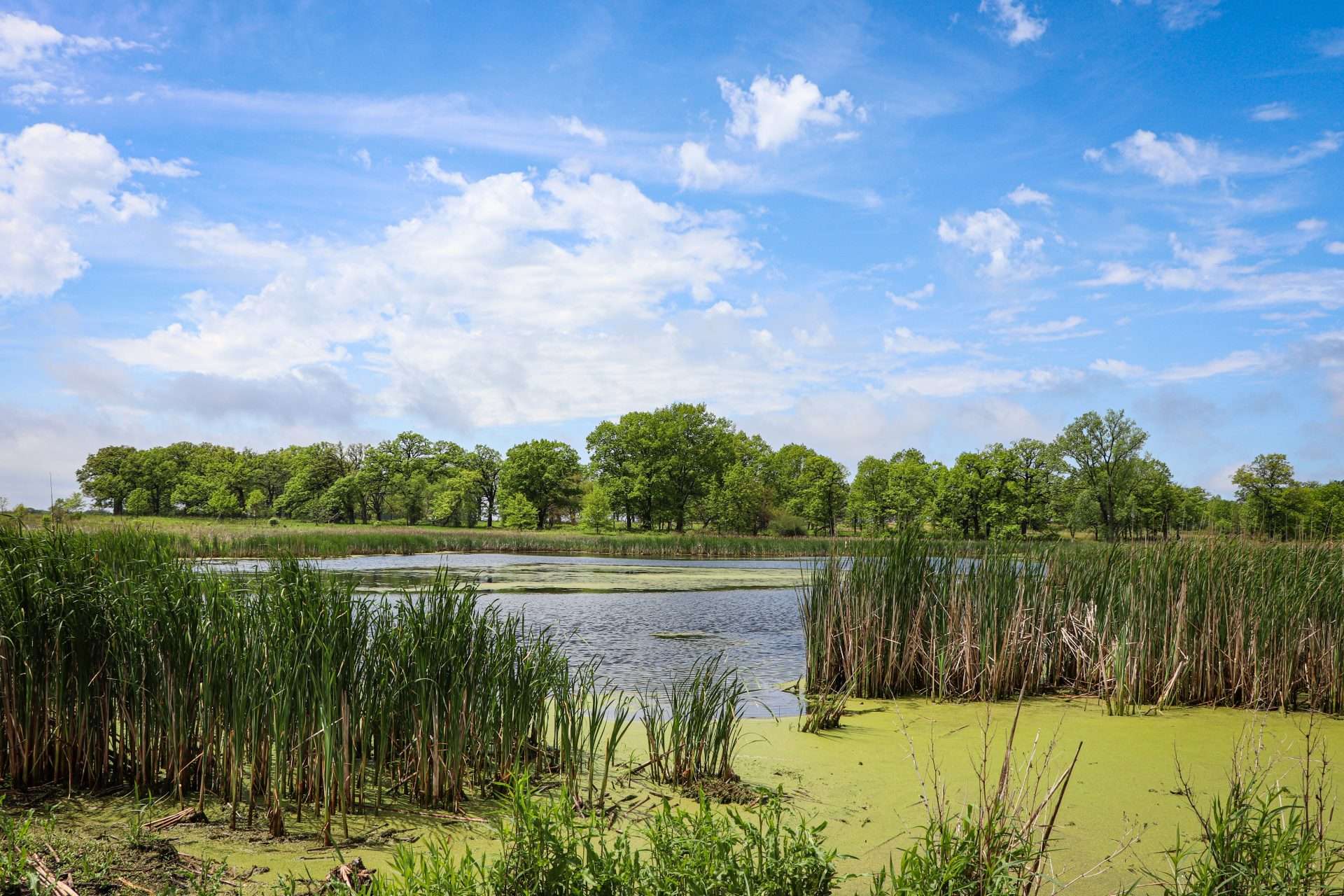
Openlands Lakeshore Preserve

Located just 25 miles north of Chicago, the Openlands Lakeshore Preserve presents a rare opportunity to visit one of the last remaining ravine and bluff ecosystems in the metropolitan region. With a $4 million grant from the Grand Victoria Foundation, environmentally rich areas have been carefully restored, and an innovative interpretive plan enables visitors to experience more than a mile of Lake Michigan shoreline and extraordinary ravine habitat in a completely unique way.

Openlands Lakeshore Preserve map and link to interactive mapClick to access an interactive map of the Openlands Lakeshore Preserve.

In memory of Kate Friedman, 1955-2012

friedmanWe are saddened by the loss of one of the magnificent artists who created original, site-specific work for the Openlands Lakeshore Preserve.

Kate Friedman's piece, Reading the Landscape, incorporated two panels of text into the legs of an abandoned trestle that spanned the ravine. Aluminum cut letters spelling out dozens of words relating to nature and culture give eloquent voice to the idea that meaning is shaped by language. Nature may be harmonious or it may be savage; but what we call it says more about us than the thing we name. 

Read more: In memory of Kate Friedman, 1955-2012

Openlands Lakeshore Preserve: Winter 2012 Updates

olp 9917 01-09-10 2Winter has at last come to the Openlands Lakeshore Preserve, and the ravines and bluffs are slumbering underneath a blanket of snow. This time of year, the moods of the lake change moment to moment – sometimes fierce, with crashing waves and glacier-like ice covering the beach, and at other times calm and glassy. Some resident birds, such as the northern cardinal, remain all winter and if you observe carefully, you may see this lovely red bird flitting from tree to tree in Bartlett Ravine. It is also a great time to search for animal tracks in the snow – you might see where a white-tailed deer or coyote made its way across a trail just moments before you arrived.

Read more: Openlands Lakeshore Preserve: Winter 2012 Updates

Directions & Contact Information

To reach the Preserve from North Sheridan Road, head east on Walker Avenue. Turn left onto Patten Road. Follow Patten Road; directly before the Patten Road bridge, there will be a parking lot for the Openlands Lakeshore Preserve to your left. 


Click here to view directions from North Sheridan Road to the Patten Road Bridge entrance of the Openlands Lakeshore Preserve in a larger Google map.

Read more: Directions & Contact Information

Podcasts

These free audio guides feature the inspiring words of ecologists, artists, and others as they reflect on the many faces of Openlands Lakeshore Preserve.

Read more: Podcasts

Natural History & Geology

The Openlands Lakeshore Preserve, at Fort Sheridan, Illinois, lies on part of the Highland Park moraine, which formed as the final glacier retreated from northern Illinois about 10,000 years ago. Geologists characterize Fort Sheridan as being within the Lake Border Moraines Bluff Coast, a hilly area that extends from the town of North Chicago at the north end to Winnetka at the south, where the land flattens out again and remains relatively even through Wilmette, Evanston, and on into Chicago.

Read more: Natural History & Geology

Early Settlers: Pre-1880s

Most of Fort Sheridan’s western border lies along Sheridan Road, east of where Green Bay Road, which winds along the top of the morainal ridge, ends in Highwood. The high ground to the east was used by Native Americans who traveled between their villages and hunting grounds to trading posts. During the early to mid-1800s, troops provided safe passage for traders and early settlers, and for a short time the trail was known as Military Road. After 1833, when the Potawatomi signed away Lake County, Cook County, and all that remained of their land in Illinois, trade and traffic along the road increased significantly.

Read more: Early Settlers: Pre-1880s

Recent History: 1888 to 1995

Between 1888 and 1993, Fort Sheridan served as a U.S Army post. Motivated by the labor strikes of 1877 and the Haymarket Riot in 1886, the Commercial Club of Chicago, a group of wealthy businessmen, supported the use of the nation’s army as a regional police force to protect property and quell worker uprisings—a plan backed by Philip H. Sheridan, a Civil War hero and commanding general.

Read more: Recent History: 1888 to 1995

Land Transfer to Openlands

Openlands was active in protecting the open space at Fort Sheridan since the base closure was first announced: throughout the late 1980s and early 1990s, we played an important role in advocating for the transfer of property to the Lake County Forest Preserve District. Ensuring that the public has the opportunity to enjoy Fort Sheridan and that its valuable natural features are protected is a logical extension of our work.

Read more: Land Transfer to Openlands

Restoring a Rare Ravine

The Openlands Lakeshore Preserve contains some of our region’s only publicly accessible ravine ecosystems, living laboratories that divulge a glimpse of the area’s rich geological past, as well as hints of a biologically rich and sustainable future.

Read more: Restoring a Rare Ravine

Join Openlands On:

 Openlands account on Facebook  Openlands account on Twitter  Openlands account on YouTube  Openlands account on Flickr
 Facebook  Twitter  YouTube  Flickr